
If the concerns over risking political capital are overcome, the long-term gains for the Indian economy will be immense, asserts A K Bhattacharya.

'We get an overzealous army of tax inspectors pushing the economy too hard,' says Ajay Shah.

Industry body CII on Thursday made a case for pushing reforms in sectors like land, labour, and agriculture by the Modi 3.0 government to accelerate economic growth, which is estimated to be around 8 per cent in the current financial year. CII president Sanjiv Puri said a lot of policy interventions in the past have put the economy on "a much stronger wicket". "The growth rate is poised to touch 8 per cent during the current year, marking the fourth consecutive year of above 7 per cent + growth.
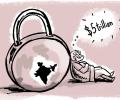
India decisively withstood global headwinds in 2023 and is likely to remain as the world's fastest-growing major economy on the back of growing demand, moderate inflation, stable interest rate regime and robust foreign exchange reserves. Despite widespread pessimism witnessed among the developed nations and the worsening geopolitical situation, India recorded a gross domestic product (GDP) expansion of 6.1 per cent in the March quarter. The growth moved up to 7.8 per cent in the June quarter and was 7.6 per cent in the September quarter. For the first six months of this fiscal, the growth was 7.7 per cent.

India can become a $6.7 trillion economy by 2031, from $3.4 trillion currently, if the country clocks an average growth of 6.7 per cent for 7 years, an S&P Global report said on Thursday. India had clocked a 7.2 per cent GDP growth in 2022-23 fiscal. But a global slowdown and lagged effect of a policy rate hike by RBI could slow down growth to 6 per cent in the current fiscal, S&P Global said in a report titled 'Look Forward: India's Money'.

BJP's reversals in rural Gujarat has prompted many policy watchers to predict that the Budget would have incentives for the agriculture sector and the rural economy.

Finance Minister Nirmala Sitharaman will present her sixth straight Budget ahead of the Parliamentary elections, matching the record of former Prime Minister Morarji Desai. Sitharaman in her pre-election Budget, which technically is a vote on account and popularly termed an interim Budget, will seek Parliament's nod for a grant in advance to meet the central government's essential expenditure for the first four months of the new fiscal year that starts in April. A new government elected after the April/May general elections will present the full Budget, likely in July.

Riding on a bull run, equity investors became richer by Rs 128.77 lakh crore in the 2023-24 fiscal, driven by robust fundamentals of the Indian economy, increased investment inflows and promising corporate earnings. After a muted performance in 2022-23, equity markets made a remarkable recovery in FY24, giving handsome returns to investors. The 30-share BSE Sensex climbed 14,659.83 points or 24.85 per cent in 2023-24.

The RBI is understood to be dithering since it would want more clarity on the cost of the fiscal policies the new government would undertake before it decides to cut rates, even though it has pencilled in a lower gross domestic product growth rate for this fiscal year.

An estimated 46 million foreign-born persons resided in the United States in 2022, approximately 14 per cent of the total US population of 333 million, according to American Community Survey data from the US Census Bureau.
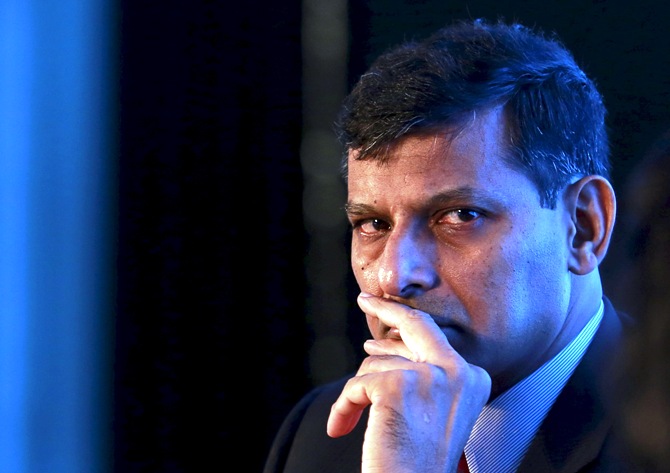
RBI Governor Raghuram Rajan said that consolidated fiscal deficit of the Centre and states rose to 7.2 per cent in 2015 from 7 per cent in the previous year.

India's public debt ratio, which remarkably remained stable at around 70 per cent of the GDP since 1991, is projected to jump by 17 percentage points to nearly 90 per cent because of increase in public spending due to COVID-19, the IMF said.

Highlights of RBI's third quarter review of monetary policy.

Fitch Ratings on Thursday retained India's growth forecast for the current fiscal at 6.3 per cent citing economic resilience despite tighter monetary policy and exports weakness, but upped year-end inflation projection on El Nino threat. The Indian economy grew 7.8 per cent in the April-June quarter of current fiscal on strong services sector activity and robust demand. "The Indian economy continues to show resilience despite tighter monetary policy and weakness in exports, with growth outpacing other countries in the region," Fitch said, while projecting 6.3 per cent growth for current fiscal (April-March), and 6.5 per cent for next fiscal.

Credit outstanding to the housing sector rose by nearly Rs 10 lakh crore in the last two fiscals to reach a record Rs 27.23 lakh crore in March this year, according to RBI's data on 'Sectoral Deployment of Bank Credit'. Experts from banking and real estate sectors attributed this growth in housing credit outstanding to a strong revival in the residential property market post-COVID pandemic on pent-up demand. According to the data of the Reserve Bank of India (RBI) on sectoral deployment of bank credit for March 2024, the credit outstanding to the housing (including priority sector housing') stood at Rs 27,22,720 crore in March 2024, up from Rs 19,88,532 crore in March 2023, and Rs 17,26,697 crore in March 2022.

Retail inflation crossed the RBI's comfort level and rose to 5.21 per cent in December on increase in prices of food items.

Improved monsoon, solid fiscal performance, and capex push by the public and private sectors augurs well for India's macroeconomic stability and growth, the finance ministry's monthly economic review for June 2023 said. But the report said that while India's domestic fundamentals remain strong, negative cross-border spillovers and adverse global developments could act as a deterrent in achieving the high growth path this financial year. "An improved matching of aggregate supply and aggregate demand in the Indian economy underpins the progress made in the control of domestic inflation and the consequent strengthening of macroeconomic stability," the review said.

'We like certain stocks from banking, insurance, retail, hospitals and capital goods.' 'Though some of these stocks may seem expensive, they will compound well over the long term, thus justifying their current multiples.'

With the reality of coalition politics staring the BJP in its face, this was inevitable, points out Ramesh Menon.

The report said South Asia is expected to be the fastest-growing region.

The new pay scale will come into effect from January 1.

If there is no third wave of the pandemic, the fiscal position of the Centre and the states will be much better than budgeted for FY22 and the states may garner Rs 60,000 crore more in tax collections at Rs 8.27 lakh crore this fiscal year than they have budgeted, a report said. The report by SBI Research on Monday bases its optimism on GST collection so far this fiscal, which has been the best ever in spite of the fact that the two months bore the maximum brunt of the second wave -- with April setting a record Rs 1.41 lakh crore and May collection a tad low at Rs 1.03 lakh crore. The report also said overall government finances do not look overstretched as GST collections have continued to maintain pace so far and the additional fiscal impact arising from free vaccination and more food supplies will only be around Rs 28,512 crore.

China is considering a gradual rollback of its last year's $586 billion stimulus package, as the economy sets its sights at over eight per cent growth this year.

Finance Minister Nirmala Sitharaman on Thursday said the budget to be presented on February 1, 2024 would not have any "spectacular announcement" as it would be a vote on account in run up to the general elections. "It is a matter of truth that February 1, 2024 budget that will be announced will just be a vote on account because we will be in an election mode. "So the budget that the government presents will just be to meet the expenditure of the government till a new government comes to play," she said.

'The actions of Indian monetary authorities will depend on how quickly they want the inflation to come down to 4 per cent.'

Finance Ministr Arun Jaitley will have to do a balancing act to manage fiscal prudence.

The government's fiscal deficits have reduced over the last five years.

The sovereign ratings outlook for India may turn negative, from stable currently, if the country's fiscal policy fails to check external shocks like crude prices or aggravates the inflation concerns, global rating agency Moody's warned on Monday.

The country's economic growth hit a decade low of 5 per cent in the last fiscal on account of poor performance in the farm, manufacturing and mining sectors.

Equity benchmark Nifty scaled the psychological milestone of 21,000 in afternoon trade on Friday, and the Sensex touched its all-time intraday high of 69,888.33 after the central bank's decision to keep policy rates unchanged in line with market expectations. The 50-share benchmark index opened on a bullish note, after taking a breather on Thursday, and rose to 21,006.10. As many as 25 stocks were trading in the green, and 24 stocks defied the broader market and were trading in the negative territory.
India's economic growth will be above 6 per cent in the current fiscal as the country has managed to strengthen its macroeconomic stability and performance even in a period of large global shocks, RBI Monetary Policy Committee (MPC) Member Ashima Goyal said on Monday. Goyal further said that a global slowdown reducing India's export growth, geopolitics fueling oil and food prices, and erratic weather are some of the continuing risks that the country faces. "India has managed to strengthen its macroeconomic stability and performance even in a period of large global shocks.
Indian economy is expected to clock an average growth rate of 6.7 per cent till 2026-27 fiscal driven by domestic consumption, S&P Global Ratings senior Economist (Asia Pacific) Vishrut Rana said on Wednesday. He said the economic growth in the current fiscal is expected to come in around 6 per cent, lower than 7.2 per cent clocked in 2022-23. "We are seeing some headwinds from the trade side which is affecting activity and that is one of the factors that is affecting growth this year," Rana said at a webinar.

'While Indian markets are indeed not inexpensive, the valuations of largecap stocks are still a considerable distance from being overstretched.'
Expressing serious concern about the country's financial health, Prime Minister Manmohan Singh on Thursday warned that economic progress could be hindered if the mounting fiscal deficit of 9 to 10 per cent of the national income was not contained.

The finance ministry expects a broad-based moderation in inflationary pressures on the back of an anticipated reduction in food prices as a result of the uptick in summer sowing. The retail inflation rate remained stubbornly clung to the 5 per cent mark in seven of the past eight months. "Core inflation is trending downwards, indicating a broad-based moderation in price pressures... Driven by strong domestic growth and benign global commodity prices, core inflation is declining continuously.

'But can it afford to present a scenario within the existing legal framework of fiscal consolidation?', asks A K Bhattacharya.

They have also called for giving cash to the poor, so that demand is generated in the economy.

India's gold and silver imports from its free trade agreement (FTA) partner UAE have skyrocketed 210 per cent to $10.7 billion in 2023-24 and there is a need to potentially revise the concessional customs duty rates under the pact to mitigate the arbitrage driving this surge, a report said on Monday. Economic think tank Global Trade Research Initiative (GTRI) said this sharp rise in gold and silver imports is primarily driven by import duty concessions granted by India to the UAE under the India-UAE Comprehensive Economic Partnership Agreement (CEPA).

Accelerating inequality, the market dominance of tech platforms and remote working are likely to be the longest-lasting legacies of the COVID-19 crisis, the WEF said in a report on Monday. Releasing its Chief Economists Outlook report during the online Davos Agenda Summit, the WEF said that beyond managing the pandemic and vaccine rollout, these trends could shape a new era of fiscal, monetary, and competition policy. Deglobalisation is seen as the least likely of the current trends to continue in the longer term; particularly as international coordination is key to resolving global challenges such as vaccine manufacturing and distribution.

The recent agreement between the RBI and the Centre marks a significant step forward toward financial inclusion.
 © 2026 Rediff.com - Advertise with us - Disclaimer - Privacy Policy - Sitemap - Feedback - About us - Terms of use - Grievances